

Williams Lake First Nation 2026 Fishing Plan
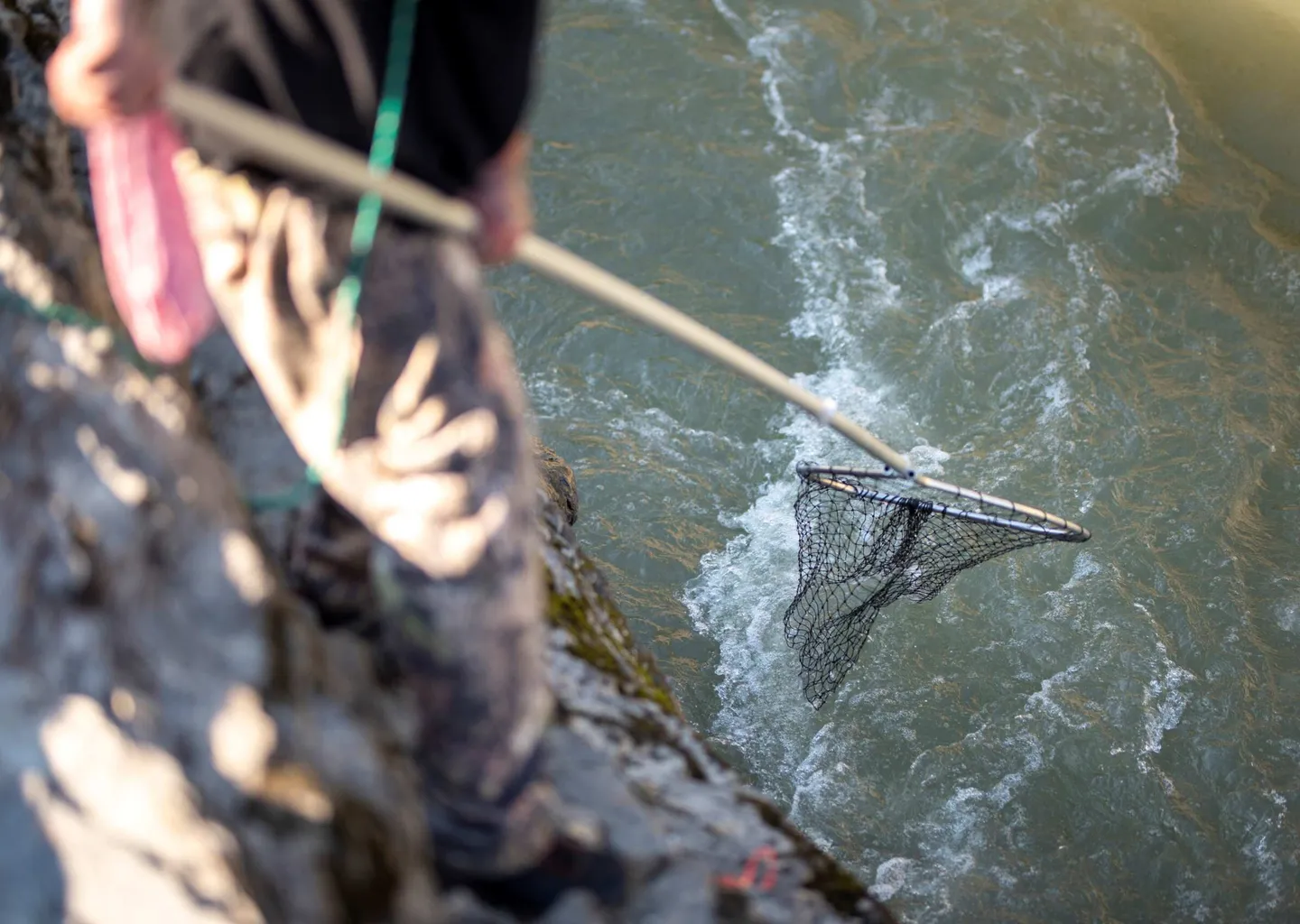
Williams Lake First Nation (WLFN) requests that all Members respect the fishing openings outlined in the WLFN 2026 Fishing Plan below. Following this plan helps ensure the protection of salmon for future generations. Your cooperation is vital to the protection of Sqélten (Salmon), the exercise of constitutionally protected fishing rights, and collective responsibility as stewards of the land, water and fish. Fishing closures are one of the primary tools used to help ensure that enough fish reach their spawning grounds and that salmon populations remain healthy over the long term. Fishing outside of designated openings may be considered unauthorized by the Department of Fisheries and Oceans (DFO) and could result in enforcement action by DFO fishery officers. Members are strongly encouraged to only fish during the openings outlined in this plan to avoid potential enforcement issues.
Scheduled Fishing Openings
In 2026, WLFN has designated specific fishing open windows to support conservation and responsible harvesting.
FRASER RIVER
| SPECIES | Fishing Open Dates in 2026 |
| NTYTYIX (CHINOOK) | July 11th – Sept 5th |
| SQLELTEN7ÚW̓I (SOCKEYE) | Aug 15th – Sept 5th |
| Č̓AAPI (PINK)* | NO RUN* |
| SXEYQS (COHO) | Not open to fishing in 2026 |
CHILCOTIN RIVER
| SPECIES | Fishing Open Dates in 2026 |
| NTYTYIX (CHINOOK) | July 11th – Sept 5th |
| SQLELTEN7ÚW̓I (SOCKEYE) | Aug 15th – Sept 5th |
| Č̓AAPI (PINK)* | NO RUN* |
| SXEYQS (COHO) | Not open to fishing in 2026 |
Note: Opening dates are subject to change based on in-season assessments. In extreme cases, emergency conservation measures may be implemented without prior notice. Closures for salmon fishing are in effect on the Fraser and Chilcotin Rivers, at all times, outside of open windows.
Conservation Measures
Sxeyqs (Coho)
WLFN urges all Members not to fish for Sxeyqs (Coho) anywhere in the territory.
These Interior Fraser Coho are at high risk of becoming locally extinct, and their protection is critical to the future of this species. By respecting these closures, we collectively uphold our responsibilities as stewards and ensure our future generations may have the opportunity to fish for them once again.
WLFN encourages Members to consider harvesting other resident fish species such as rainbow trout, bull trout, whitefish, suckers, and kokanee outside of the scheduled salmon fishing openings.
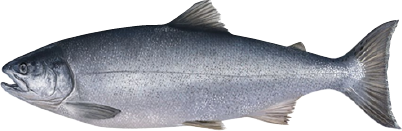
Sxeyqs (Coho) during its ocean/migration phase. (© NOAA Fisheries https://www.fisheries.noaa.gov/species/coho-salmon)
Call for Community Fishers
WLFN is seeking community members who are willing to assist with harvesting salmon for the Salmon Celebration. This harvest will help ensure that salmon are available for demonstrations, community meals, and distribution to members during the event.
Fishers who participate will play an important role in supporting this community celebration and sharing knowledge with youth and families. Burlap sacks, ice, honorarium and gas cards will be provided to participating fishers. To help coordinate harvest activities safely and effectively, fishers are asked to register in advance. Individuals interested in participating are asked to please contact Chantelle Rolph, Natural Resources Administrator, at [email protected] or 250-296-3507 ext. 316.
Catch Monitoring and Enforcement
During the 2025 fishing season, catch monitors from WLFN, Northern Shuswap Tribal Council (NSTC) and the Tsilhqot’in Government (TNG) will be present at designated sites on both the Fraser River mainstem and the Chilcotin River to record First Nations harvest data for ongoing research and stock assessment.
In addition, DFO staff and enforcement officers may be present at various fishing locations.
We kindly ask all Members to show respect and patience toward monitoring personnel as they carry out this important work in support of sustainable fisheries management.
Kwellk̓ém̓t (Farwell Canyon) Update
On July 30, 2024, a large landslide occurred along the Chilcotin River, completely obstructing the river channel and forming a substantial debris dam. On August 5, 2024, the debris dam failed, releasing significant volumes of water, sediment, and debris downstream to the confluence of the Chilcotin and Fraser Rivers.
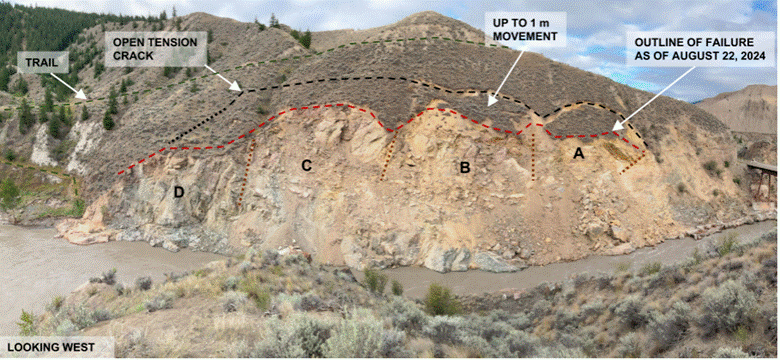
Farwell Canyon Rockslide Panorama, August 22, 2024. BCG Engineering Report.
The sudden release of water and erosion adversely affected the geotechnical stability of the Farwell Canyon area, including the development of a large tension crack situated above the primary fishing area. The instability raised significant concerns regarding potential impacts to migratory salmon populations. In response, Secwepemc communities coordinated with TNG in delivery of proactive approaches to relieve the likelihood of slope failure. These measures were undertaken between December 2025, and May 2026, in advance of the salmon migration.
These efforts focused on protecting human health and safety and safeguarding salmon migration by addressing landslide and rockfall hazards, including scaling and removing unstable material above the fishing area while protecting the cultural and archaeological values associated with this long-standing Secwepemc fishing location
At Kwellk̓ém̓t (Farwell Canyon), fishing will be permitted during scheduled fishing openings as detailed in this plan. Fishing will be permitted downstream of the Farwell Bridge; and upstream along the Chilcotin River, to Hanceville.
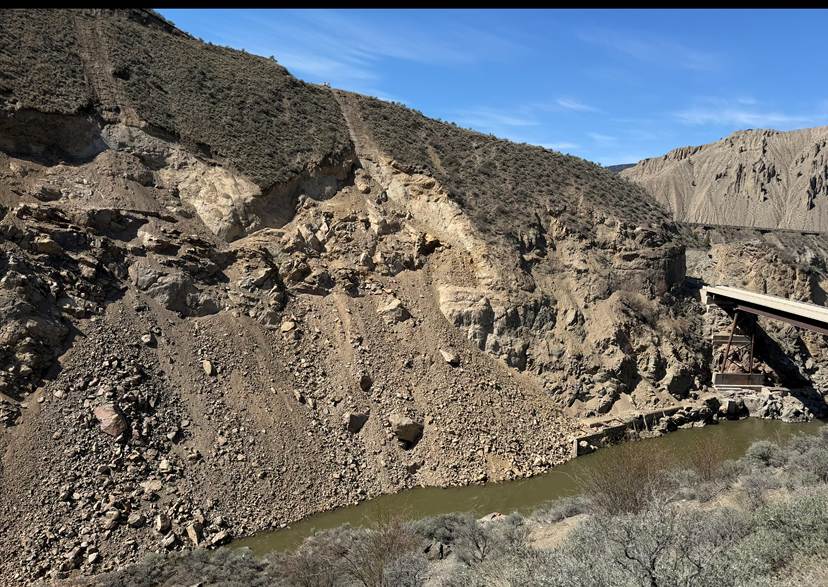
Farwell Canyon Tension Crack Area, post slope stabilization work. Although the area has been cleared for fishing in 2026, members are still reminded to take care, avoid any unstable slopes, and to stay alert for falling rocks and debris.
Salmon Celebration – Aug 19 & 20, 2026
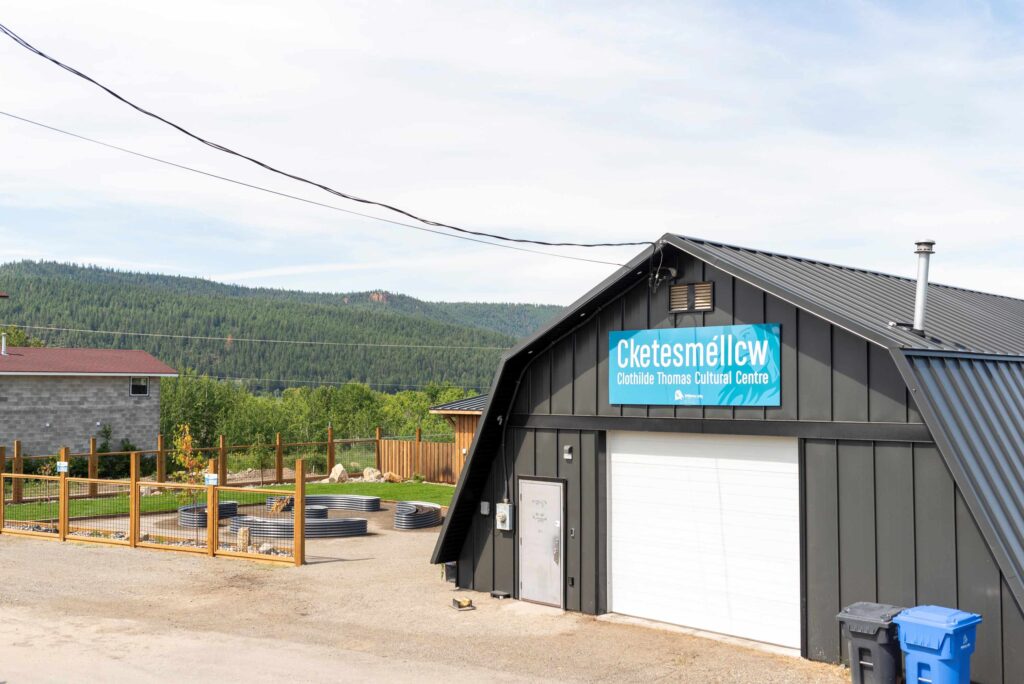
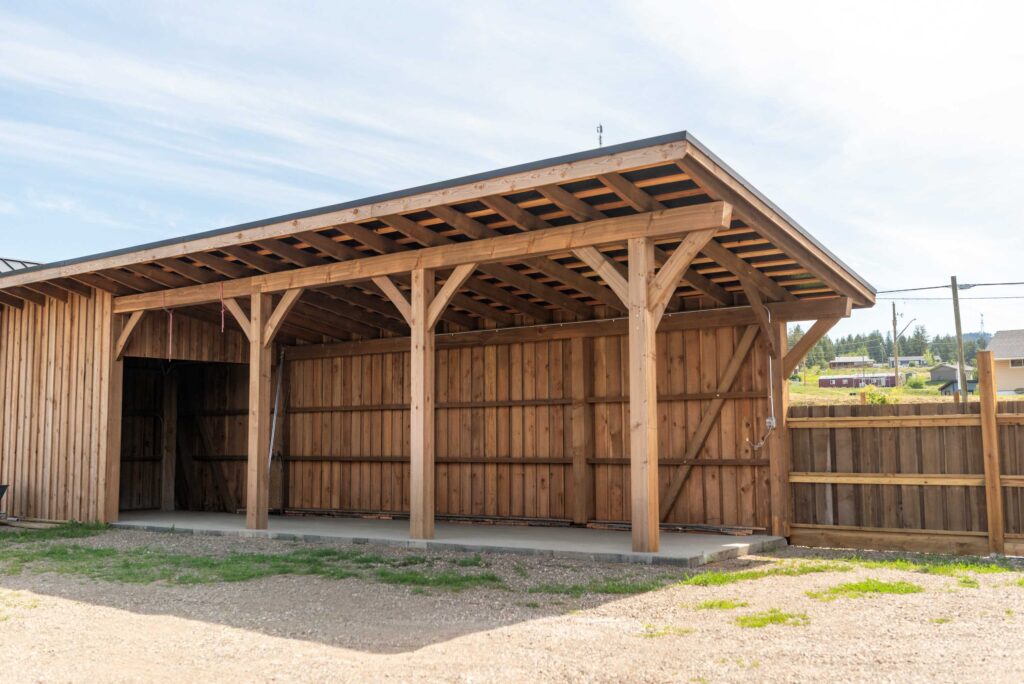
WLFN plans to host a community Salmon Celebration at the new Cketesméllcw Clothilde Thomas Cultural Centre to honour the return of salmon and the cultural traditions that connect WLFN members to the land, waters and salmon that we rely on. The event is tentatively scheduled for August 19 and 20, subject to fishing openings and salmon returns.
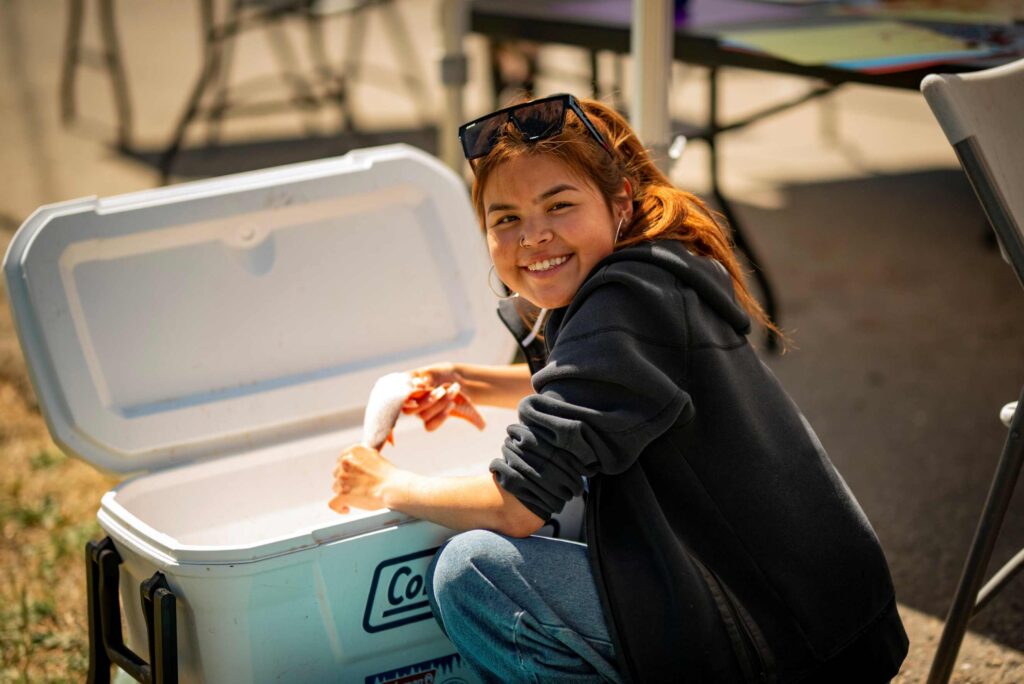
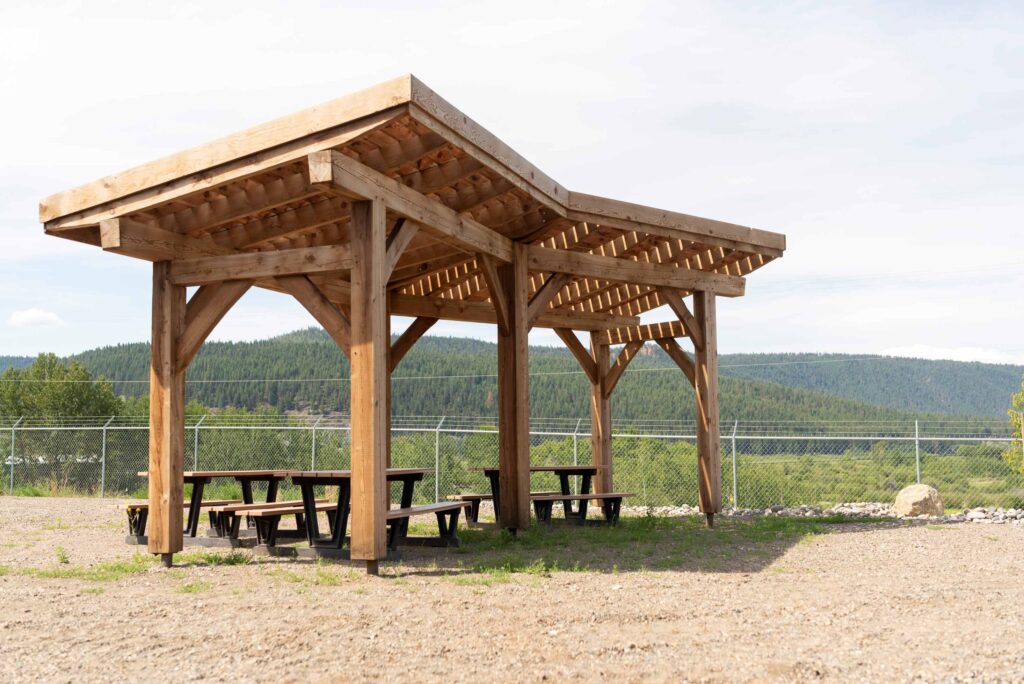
The Salmon Celebration will bring community members together to share food, knowledge, and cultural practices related to salmon harvesting and preparation. Activities will include demonstrations of traditional salmon harvesting and processing, such as filleting freshly harvested salmon, preparing fish for smoking and drying, and cooking salmon over open flame and barbecuing at the outdoor gathering space.
Elders, experienced fishers, and WLFN staff will also share knowledge about salmon stewardship, traditional fishing practices, and the importance of protecting Upper Fraser salmon stocks. The event is intended to create opportunities for intergenerational learning, allowing youth and families to reconnect with cultural knowledge while strengthening community relationships. Harvested salmon will be processed and shared with community members, with opportunities to learn canning and other preservation methods.
Overview of the 2026 Sqélten (Salmon) Runs
Sqlelten7úw̓I (Sockeye)
The 2026 Fraser Sqlelten7úw̓I (Sockeye) run is expected to be stronger than in recent past years excluding 2025 (2019-2024), with a forecasted return of approximately 7.7 million total Fraser sockeye, supported by a relatively strong 2022 brood year. Key spawning systems forecasting good returns (best since 2019) include the Chilko, Quesnel, and Nadina River systems. Importantly, a combined estimated 56% of these sockeye are expected to migrate up the Quesnel (1.6 million) and Chilcotin (1.7 million) Rivers, which lie within WLFN territory and remain the two key focus areas for conservation and harvest opportunities.
To support the long-term sustainability of this important run, Members are encouraged to avoid harvesting Sqlelten7úw̓i before the official opening dates. Avoiding early harvest, especially of early-timed Sqlelten7úw̓o bound for sensitive systems like Stuart (Early Stuart sockeye) and Nadina (Early Summer sockeye), gives these fish the opportunity to reach their spawning grounds. Protecting these early returns now will help support stronger Sqlelten7úwi populations in the future and preserve this vital food source.
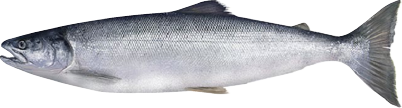
Sqlelten7úw̓i (Sockeye) during its ocean/migration phase. (© NOAA Fisheries https://www.fisheries.noaa.gov/species/sockeye-salmon)
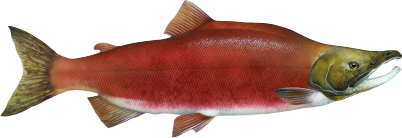
Sqlelten7úw̓i (Sockeye) during its spawning phase. (© NSEA https://www.n-sea.org/salmon-and-their-habitat)
Ntytyix (Chinook)
The forecast for Upper Fraser Ntytyix (Chinook) in 2026 remains deeply concerning, with projected returns among the lowest on record for all major populations in the region. While forecasts for Ntytyix across other parts of B.C. are generally more positive this year as last, the stocks relied upon by WLFN are facing severe challenges. These include long-term impacts from the Big Bar and Chilcotin slides, ongoing drought conditions, and broader climate-related stressors, all being compounded by an increasing recreational fishery putting pressure on Chinook by catch and release mortality.
The anticipated return range is well below historical levels and below the current average at potentially 54,500 Chinook (28,000 to 107,000). To support recovery efforts, Members are strongly encouraged to wait until the opening date before harvesting Ntytyix, particularly those migrating through WLFN territory early heading to nursery streams up the Quesnel and Chilcotin systems. Stewarding these vulnerable early timed runs is critical to ensuring they are available for the community in the future.
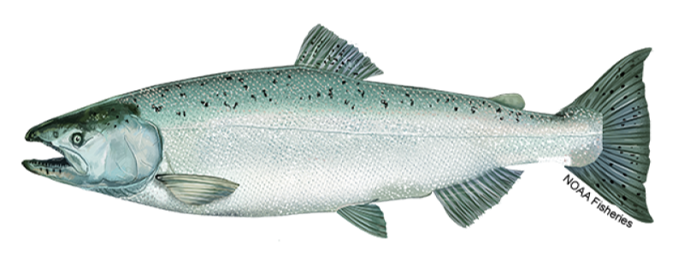
Ntytyix (Chinook) during its ocean/migration phase. (© NOAA Fisheries https://www.fisheries.noaa.gov/species/chinook-salmon)
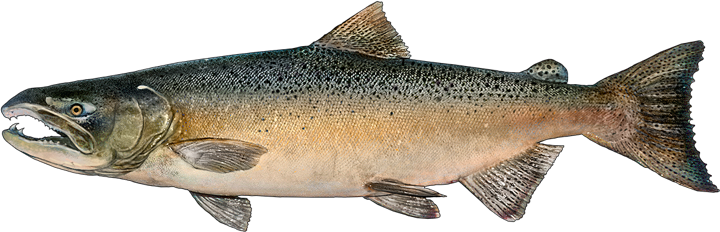
Ntytyix (Chinook) during its spawning phase. (© NSEA https://www.n-sea.org/salmon-and-their-habitat)
č̓aapi (Pink)
The 2026 Fraser caapi (Pink salmon) run will be practically non-existent, as they run on a two-year cycle with dominant runs during odd years (2023, 2025, 2027 ext.). Caapi have a two-year lifecycle returning to spawn on the second year, and for Fraser River caapi the dominant cycle line, as we saw last year, will return in 2027.
*2026 is an even-year return, which historically produces lower overall abundance of Caapi (Pink salmon), though localized strength can still occur near the ocean (lower Fraser).
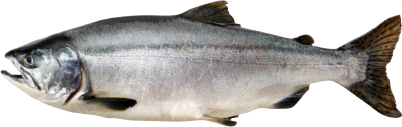
č̓aapi (Pink) during its ocean/migration phase. (© Alaska Seafood https://www.alaskaseafood.org/species/pink-salmon/)
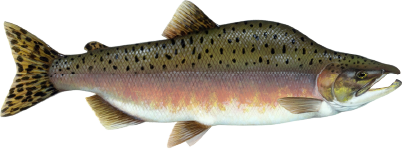
č̓aapi (Pink) during its spawning phase. (© NSEA https://www.n-sea.org/salmon-and-their-habitat )
Sxeyqs (Coho)
For the first time in decades, Interior Fraser River Sxeyqs (Coho) salmon are showing signs of recovery as the last three seasons showed improvements. This trend is likely due to a combination of favorable ocean conditions, strong fry-out survival, and effective past management, but this short trend is being met with a need for cautious expectation. DFO has stated that the 2026 season is a moderate, highly condition dependent one for Sxeyqs.
However, despite these promising indicators, the specific stocks of Sxeyqs that spawn within WLFN territory remain critically low, and their numbers are still too low to support extensive harvesting. As such, WLFN asks all Members to refrain from harvesting Sxeyqs this year to ensure this fragile recovery continues and strengthens into future seasons.
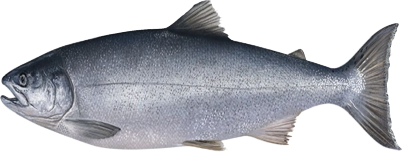
Sxeyqs (Coho) during its ocean/migration phase. (© NOAA Fisheries https://www.fisheries.noaa.gov/species/coho-salmon)
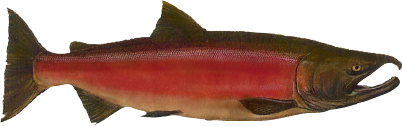
Sxeyqs (Coho) during its spawning phase. (© NSEA https://www.n-sea.org/salmon-and-their-habitat)